

0755-29784870
0755-29784969
17F1703, Building 1, Runzhi R&D Center, No. 5 Runfang Road, Xingdong Community, Xinan Sub-district, Bao'an District, Shenzhen City, Guangdong Province, P.R. China
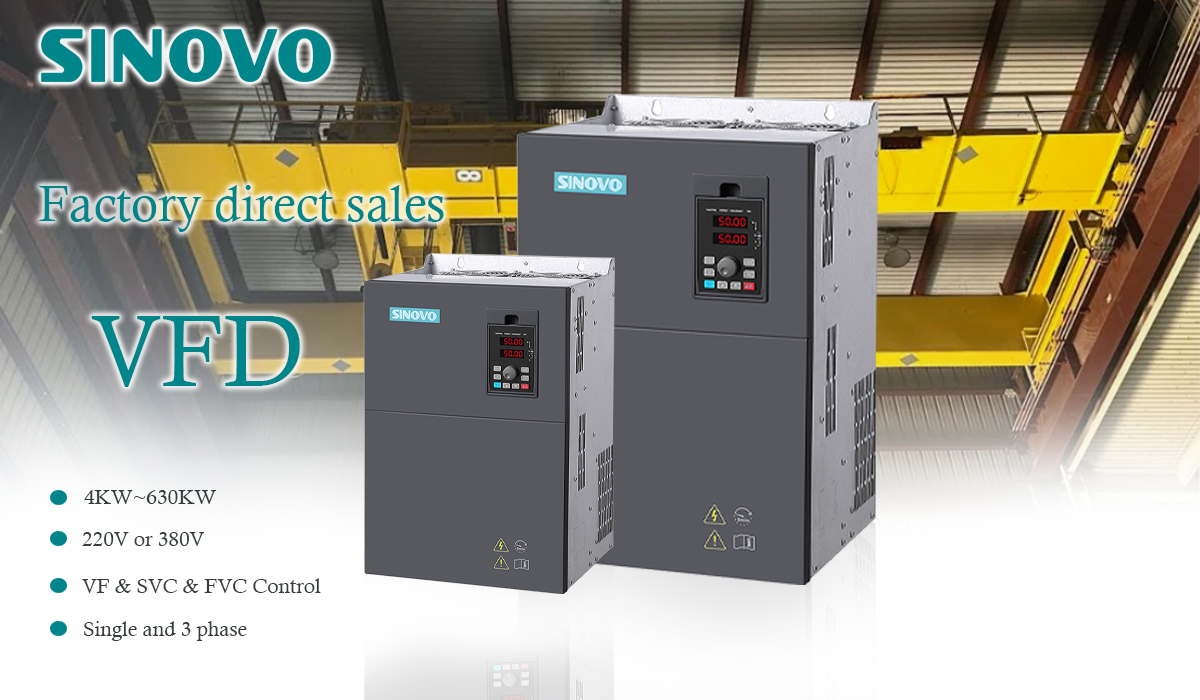
Does maintaining your overhead cranes feel like a repetitive cycle—replacing worn brakes, transmissions, and couplers? If so, it’s likely a sign that your control system is outdated.
The good news: modernizing with Variable Frequency Drives (VFDs) can extend equipment life, reduce maintenance, and transform control precision.
1. From Niche to Standard: The Rise of the VFD
Introduced to material handling in the late 1980s following advances in power transistors, VFDs were first specified only for high-duty Class D and E cranes on bridge and trolley motions. Today, they are the standard for controlling all electric motions on a crane—hoist, bridge, trolley, and even hook rotation—across applications from light-duty packaging systems to heavy process cranes.
A VFD works by varying the frequency and voltage supplied to an AC motor, creating a smooth sine wave that allows for fully adjustable speed, acceleration, and deceleration. This “tricks” the motor into precise control, far beyond the capabilities of traditional contactor-based systems.
2. Why Upgrade? The Limitations of Legacy Control Systems
To appreciate the VFD advantage, it helps to understand what it replaces:
Single- or Two-Speed Motors with Contactor Controls: The operator has essentially “on/off” control. A single-speed motor runs at one fixed speed (e.g., 50 fpm). A two-speed motor offers only two set speeds (e.g., 40 and 120 fpm). Acceleration is abrupt, causing mechanical shock and wear. “Reduced voltage starters” can soften starts but generate excessive heat, making them unsuitable for high-duty cycles.
Wound Rotor Motor & DC Controls: For decades, the solution for high-performance cranes was the wound rotor motor system, which controlled acceleration via external resistor banks. While effective, it is complex, difficult to troubleshoot, and inefficient. DC controls offered good performance but with similar drawbacks in complexity and energy use.
3. The Modern Standard: Precision, Reliability, Efficiency
Unlike these legacy systems, a VFD provides:
Infinite speed control within a range, enabling precise load spotting.
Smooth, programmable acceleration/deceleration ramps, drastically reducing mechanical stress on brakes, gearboxes, and structures.
Higher efficiency and simpler maintenance compared to complex resistor banks or DC drives.
The Bottom Line
What began as a premium solution for high-end cranes is now a cost-effective upgrade for nearly any overhead crane system. The shift from fixed-speed contactors, wound rotor resistors, and DC drives to AC motors with VFDs represents the single most significant advance in crane control in recent decades—delivering unmatched control, reliability, and longevity.


 ไทย